Breakfast? Eggless Omelettes

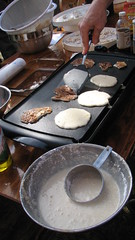
I would never have thought it possible. A vegan omelette. What a silly concept, but in reality it’s amazing. Groundbreaking.I’ve always thought tofu scrambles to be o.k. Tofu can never become an egg, there’s just something noticeable about the taste and texture. I’d prefer granola anyways.

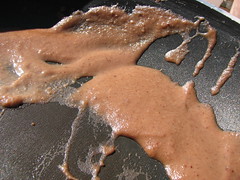
But this recipe over at FatFreeVegan is awesome. Taste, texture, almost creepy. I have a smaller skillet (about 6″) and it’s cast-iron. I think a non-stick would do a much better job. My omelette didn’t fold as easily because of my pan shape and material and found that her recipe made 2 omelettes in my pan. Regardless, it presented well and tasted great. I made the batter and held it for a few days in my fridge and it still cooked up great after sitting. You can’t really do that with eggs (health code violation). So I’m excited to find yet another example in life where eggs aren’t needed, necessary or missed.  In the picture, I ate it with arugula and broccoli. I’ll have to try one with some of my foraged goods!

Popularity: 20% [?]

Fig Tart with Maple-Cashew Cream in a Rosemary Cornmeal Crust


Fig Tart

Taking a break from mushrooms, let’s look at this luscious tart I made recently. It was really easy to make and very tasty. For the crust, I veganized a recipe off epicurious and it was amazing. It’s a cornmeal crust with rosemary and I made it in my food processor. Instead of butter I used Earth Balance. I par-baked the crust for about 25 minutes at 375 degrees (or until it gets a nice golden color).

During the baking of the crust, I made the cashew cream filling from My Sweet Vegan, which is simple and easy (food processor!) and very rich. I found it to be too thick and I added more water to thin it out to more of a custard consistency. I really like the maple syrup in it, it gave it a nice dimension. I tossed some fresh, local figs in this fruit concentrate sweetener I have from Mystic Lake Dairy. It’s great stuff and deserves it’s own post one day. Once the crust was baked and cooled, I spread the filling in it and arranged the figs on top. Then I baked it at 350 degrees for another 20 minutes to soften the figs and brown the crust. I loved the rosemary in the crust and the texture the cornmeal gave it, along with the sweetness of maple syrup and richness of cashews and of course, the figs. I adore figs. I didn’t know you could even eat or procure fresh figs until I moved to the west coast. Figs used to be a thing of dried round packages at holiday times, which are tasty but are nothing compared to the fresh thing. There’s just something about figs I adore. Luckily they grow well here and I plan to have my own tree one day. Currently my favorite fig variety is the Adriatic. It tastes like fig jam and it’s amazing.

Popularity: 23% [?]

What’s in MY freezer?

Billy over at Vegan Talk created a tag, you’re it! for unveiling your freezer. I have recently been tagged by For the Love of Guava and feel it is my duty to share with the world what is in my freezer. I feel like it connects to the age old veg*n question, “What do you eat? How do you get all your ___ (enter vitamin, mineral, protein, basically anything here) ? How do you have time to cook?” and all the other lovely questions the omnivore world has for us.


The abyss

Let me preface my overwhelming, secret freezer by stating that I have a tiny freezer and I cook. A lot. I love to cook, I love to preserve, I love food from scratch. I also have a job, so some days I don’t cook and like to have stuff available to make a quick meal or heat and eat for a quicker meal to tame the ravenous beast. Maybe I can inspire someone to make their own burritos instead of spending $4 for a prepared, packaged frozen burrito (although I do buy them from time to time).

So, in no particular order, here are the ingredients of my busting-at-the-seams freezer, which is ready for a famine or any big event that allows me to still have electricity to access my frozen goods.

  • Frozen fruit: bananas, marionberries, strawberries, blueberries, peaches and rhubarb
  • Pumpkinseeds
  • Lemon & lime zest
  • Sausages
  • Ground flax seeds (flaxmeal)
  • Pesto
  • Tofu
  • Tempeh
  • Almond meal
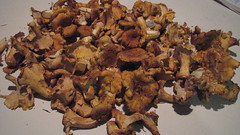
  • Sauteed chanterelles
  • Avocado pasta sauce
  • Buckwheat flour
  • Ice cubes
  • “Fake” ice cubes (great for not watering down drinks, though I don’t use them very often)
  • Applesauce (I think you can freeze this)
  • Peas
  • Corn
  • Homemade roasted peppers
  • Homemade falafel patties
  • Cooked, drained chickpeas and cannelini beans
  • Homemade burritos
  • Blanched sliced almonds
  • Smartdogs
  • Pizza dough
  • Joanna’s chiken
  • Oat flour
  • Graham flour
  • Homemade tomato sauce
  • Potato celery soup
  • Tempeh bacon
  • Leftover rhubarb coffeecake

Freezer door

In the door we have filo dough, lemon/lime juice cubes stored in old yogurt containers, amaranth flour, dehydrated cherry tomatoes, wonton wrappers, pine nuts (in the kombucha bottle), more tofu and one hotdog bun (for a lonely, lazy night). Believe it or not, it all fits and I have plans for most everything in the freezer. I obviously love to preserve and can envision an upright freezer one day in my future: watch out u-pick farms! I think if I reach that point I’ll just have an out of control garden. I look forward to that day. Having a tiny freezer is hard, but I’m obviously surviving and not starving.

In keeping with the theme of sharing with the world your most personal of eating habits (and in no way condoning chain letters or random obnoxious fwd’s), I have tagged 5 veg*n bloggers.
Vegan Alley
Heathen Vegan
Vegannifer
Deenifying Myself
VeganKnitting

Popularity: 13% [?]

Mystery Mushroom


Cluster of …

Underside

I got this at work last night. No one could tell me what it was, therefore, they couldn’t sell it to the public. It’s not in my pocket guide for mushrooms, but I know it’s edible and wild. Any guesses? It has little gills and they are so cute.

Popularity: 15% [?]

Chanterelle Quiche


Chanterelle Custard/Quiche

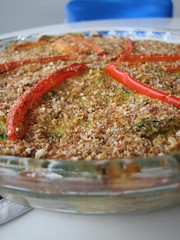
I finally made it to the store and bought some lecithin granules so I could make Wildman’s Chanterelle Custard. I was intrigued by the recipe and was a little scared to use half of my week’s harvest for a dish I’d never tested, but I’m proud to report it came out awesome. The flavors were great. It was eggy because of the tofu but the flavors were nice and delicate to highlight the chanterelle. I put it in a 9″ pie plate and had to bake it for 60 minutes instead of the recommended 30 minutes. It browned on top but never burned. I used the Mori-Nu tofu, perhaps it had too much water in it? After 30 minutes it was really soupy. After 60 it was great and I served it with a slotted spoon so you couldn’t tell anyways. I must have liked it because I ate half of the dish for dinner with a salad and it’s supposed to feed 6. The recipe is in his Wild Vegetarian Cookbook but he’s also kindly shared it on his website.

Popularity: 17% [?]

Double Bonus Mushroom: Cauliflower & Lobster Mushroom Soup Recipe

My wild mushroom week is overlapping into this week and I don’t mind. I made an earthy, delicious soup with my cauliflower mushrooms that I had to share. Their cooked texture makes me think of rice noodles. I think they would be fun with a stroganoff sauce over them or a Thai sauce. A simple saute in garlic, olive oil and Earth Balance is all it needs to bring out the depth of flavor, but these babies are big and needed to be used in more than one dish. By the way, I sauteed it for about 10 minutes and I feel fine. I’m not sure of the ideal cook time, I’ve seen it used in 40 minute baked casseroles and I’ve seen a 3 minute boil followed by a 2 minute saute. I think the fresher it is, the less you have to cook it to make the tough go away.


Lobster Cauliflower Soup

This soup can be substituted any way you like it. Play around with the mushrooms and the grain. It’s a simple dish and comforting for that cold weather coming. It’s closely based off of a Leslie Cerier recipe. Enjoy!

A Soup that doesn’t contain Lobsters or Cauliflower

Yield: 4 hungry people

Ingredients

  • 3 cups chopped cauliflower mushroom
  • 1/2 cup rice milk (or other)
  • 7 cups water, divided
  • 1/2 cup pearled barley
  • 1 bay leaf
  • 1 Tbl dried shiitake
  • 1 Tbl dried porcini
  • 1 Tbl olive oil
  • 1 medium onion, medium diced (1 cup)
  • 1/2 carrot, 1/4″ rounds (1/2 cup)
  • 1 rib celery, 1/4″ slices (1/4 cup)
  • 3 cups sliced lobster mushroom
  • 1/2 cup white wine
  • 1 tsp dried thyme
  • 1/2 tsp dried sage
  • 1 tsp sea salt, or more to taste
  • 1/4 tsp black pepper
  • parsley for garnish

Method

  1. Soak cauliflower mushroom in milk. I’m not sure if this accomplishes anything, but I read it makes it more tender. I think the ideal is 30 minutes but I forgot about it and it was more like an hour.
  2. In a stockpot, combine half of the water, barley and bay leaf and bring to a boil. Reduce heat and simmer, covered, for 40 minutes.
  3. Bring the remaining water to a boil in a separate pan and once it reaches a boil, turn off the heat. Add the dried mushrooms and allow that to soak for at least 20 minutes. (Good timing to get it started while the barley is cooking).
  4. Heat the oil in a skillet of your choice and saute the onions for about 5 minutes.
  5. Add the carrots, celery and lobster mushrooms and saute for 10-15 minutes or until the lobsters are soft and you don’t feel scared to eat them. A lot of water should be cooked off at this point, but you don’t want too dry a pan.
  6. While the lobsters are cooking, strain the cauliflower mushrooms from the milk and add it to the simmering barley mixture along with the dried mushroom water. Return mixture to a simmer and continue cooking for 10-15 minutes (you can time this together with the lobster mushrooms).
  7. Add the sauteed lobster mixture to the soup with the wine, thyme, sage, salt and pepper. Simmer for 5 minutes more, balance salt to your palette and serve with some parsely to liven it up.

Popularity: 25% [?]

Bonus Mushroom Day: Cauliflower Mushroom (Sparassis crispa)


Money grows on mushrooms

That’s right, wild mushroom week has been extended to include this beauty! While hunting for chanterelles recently, I came across this mushroom growing at the base of a Douglas Fir tree. A few weeks ago I was flipping through pages of a mushroom identification guide and saw the cauliflower mushroom. I thought to myself, that would be a fun mushroom to find in the woods! It has manifested itself into my reality because I now have a cauliflower mushroom in my possession and I can’t figure out what to do with it.

I’m excited to share that there are no toxic lookalikes, so it was pretty easy to identify it and feel confident. The one I found is pretty small. They can grow up to a foot and a half in height and weigh up to 30 pounds. They start to appear at this time of year, so luckily I found a small one to work with. It looks like a ball of egg noodles and it’s quite firm in texture which may mean chewy. My plan is to saute some of it and throw the rest in a wild mushroom barley soup with the chanterelles and lobster mushrooms. I’ll report on the results.


Sauteed with a little bit of garlic

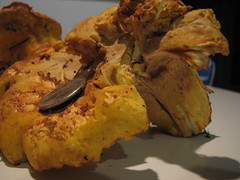
Cauliflower mushrooms, like the lobsters, are parasites. They grow at the base of conifer trees, but are not a common mushroom. They prefer old-growth forests and should be cut at the base so it can continue to grow again. If it is pulled out of the ground by the root, it is gone forever. Descriptions of this mushroom include: brain, cauliflower, seasponge. They are commercially sold as white fungus. I found the scent of the mushroom to be pretty unique. It was sort a a sweet spicy sour, which I doubt is a helpful descriptor. My book calls it “musky,” which is much more accurate. Like boys’ cologne in the 90’s.

It supposedly freezes and dries well, but I can’t prove it because I’m going to cook it all up today!

Popularity: 12% [?]

How to Clean a Mushroom

I end this wild and wacky mushroom week with sage advice. Don’t wash your mushrooms! I cringe whenever I see someone cleaning mushrooms that way. Mushrooms are like little sponges and if you submerge them in water, it changes their texture for the worse. I come from the belief system that a little dirt is actually beneficial for you (immune strength and b12). I don’t eat handfuls of dirt, but I refuse to wash my mushrooms. If this freaks you, read on. I still clean mushrooms, just with a different method.

While foraging, I try to clean as much dirt off in the field as I can. I’m lazy and use my knife and blow on the gills. You could carry a little brush with you (which I will when my current toothbrush goes kaput). But back in the kitchen for wild mushrooms or storebought ’shrooms, the best way to clean them is with a damp towel. I find a damp paper towel works best, but it is wasteful to use paper if there is an alternative. I have a stack of bar rags in my kitchen and they serve this purpose beautifully. I dampen them and gently wipe away any offending dirt. You can easily clean the stem with a paring knife. I rinse out my rag, dry it on the faucet and then throw it in the hamper. When I have a bigger kitchen, I may have a designated mushroom rag with it’s own hook. Right now, space is of the essence where I live and I can’t be draping towels all over the place.

So please, please do NOT wash your mushrooms. Lightly brush away the dirt with a towel/rag or mushroom brush. Has anyone tried these fancy brushes? I’ve seen them in the stores but haven’t tried any. Thanks for listening. Mushrooms across the world will have their dignity back.

Popularity: 13% [?]

Yellow Chanterelles


Cantherellus Formosus

My current favorite mushroom is the chanterelle, Cantherellus Formosus. They have a great texture, firm but not too chewy. My books say that they smell like apricots, although some beg to differ. I think it has a very fresh, floral smell. I also like that they aren’t dirty mushrooms like lobsters who grow in the duff or morels who harbor bugs. They are pretty easy to spot as well, being a nice yellow-orange hue. In the West coast they pop up in the fall, so the big challenge is to tell them apart from fallen leaves. On the east coast, their season is earlier and longer, from June to November. Their shape is elegant and stately, the cap grows up in a trumpet shape and has delicate ridge-like gills that travel down the stem. Technically, they don’t have true gills like your classic button mushroom. Their false gills look like wrinkles and they fork off along the underside of the cap.


In their natural habitat

They are also known as egg mushrooms, girole and pfifferlings. There are many different types of chanterelles out there, including the white chanterelle which grows in the Pacific NW (I haven’t found those yet). My brother in VT commonly finds yellow foot chanterelles. On the East coast, they are mostly found in hardwood forests or mixed forests. In the Pacific NW, they tend to grow under conifers (pine, Doug fir) and oak. Chanterelles can be found alone, scattered or in large clusters.


Sauteed with garlic

I prefer them fresh, but you can also dry them or dry-saute and freeze the mushrooms. To dry sautee, just heat up a skillet and add the cleaned mushrooms. Once they have released their juices, they are good to be frozen (with or without their juices). Once frozen, they are good for a whole year to get you by until next chanterelle season. I have a batch in my freezer waiting for their future in a mushroom soup. I use them in any dish requiring mushrooms, but it’s good to eat them with simple dishes because chanterelles have such a delicate flavor. I tend to sautee them with some garlic in a mixture of olive oil and Earth Balance. I have no patience to make anything fancy with them, but the Wildman has an interesting recipe for a chanterelle custard I’ll try next time I have a batch in the house.


Chanterelle Pesto Pizza

Last, but most importantly, there are 2 look alikes for this mushroom. The toxic Jack O’Lantern (Omphalotus illudens) is very similar to the chanterelle, except that it glows in the dark and has very distinct gills that are thinner and more crowded. This website has really good photos for gill comparison. Luckily, it won’t kill you, just make you really sick. Jack O’Lanterns are always found on decaying wood or trees and grow in clusters, which is not true of the chanterelle. The other look alike is the false chanterelle, which is edible but apparently not very tasty. False chanterelles (Hygrophoropsis aurantiaca) look very similar to chanterelles, except that their false gills are blunt instead of sharp. I have read that false chanterelles could cause stomach issues and even hallucinations. I haven’t seen either in the wild, only the lovely chanterelle.

Popularity: 18% [?]

Vegan Lobsters


Isn’t it striking?

My first experience with a lobster mushroom (Hypomyces lactifluorum) was about a year and a half ago, eating a good-bye dinner with friends at Sitka & Spruce, an underground foodie restaurant in Seattle. I guess it’s not so underground anymore but the concepts of farm to fork, local, seasonal and sustainable are echoed in every detail of that restaurant and their daily changing menu. I was very impressed that they easily (and deliciously) did an impromptu 5 course vegetarian family style dinner for us. And I met the lobster mushroom. They served it with vermicelli and a delicate sauce (of which I don’t remember). The mushrooms stood out. I almost called the server back to the table because it looked like lobster meat and had the same texture and flavor of lobster meat. I was assured that they were locally foraged, hand-picked lobster mushrooms. I was never a fan of lobster growing up, only if I bathed it in butter. At that point I was just eating butter with something to chew. But I’m not against a meaty, earthy taste and immediately loved the mushrooms (once I knew it wasn’t a crustacean).

Occasionally I’ll see fresh lobster mushrooms at farmer’s markets or specialty grocery stores (for outrageous prices). But the ones in the store are old, dried and decaying. I’ve been finding more and more in the woods lately on various hikes and foraging expeditions for chanterelles and it’s really exciting to find them. They are bright orange and easy to spot on the forest floor (usually they are peeking out under the leaves). There aren’t any lookalikes for this mushroom, but it is important to make sure it’s the right kind of lobster, because it really isn’t a mushroom after all.


Cross-section

It is a parasitic mold that takes over other wild mushrooms. If you cut it open, you don’t see the other mushroom inside. All of the old mushroom’s tissues have been turned to “lobster.” I think it’s fascinating. Luckily for the forager, the lobster fungus is edible. The scary part is if the lobster is growing on a toxic mushroom, thus bad news for belly or worse. My readings have instructed me that the bright red lobster mushroom is selective and only grows on specific Russula or Lactarius mushrooms (both edible). I can’t find any info about look alikes to the lobster, it seems pretty unique. There is a lobster-like mold that takes over toxic mushrooms, but the photos I’ve seen it looks nothing like the classic lobster mushroom. So I will not worry and be sure to cook it for at least 15 minutes before enjoying it. I’ve had lobster mushrooms in meals over the past two weeks with no sick feelings, so I will trust the experts.

What to eat it with? Since it’s meaty and sort of fishy, simple pasta dishes are nice, as are sautees with garlic and olive oil. You could also marinate it and grill it, which sounds awesome. I made a risotto with them and chanterelles and that was a nice welcome dish for fall. They are about $10/lb at my local grocery store if you are too scared to forage for them.

Popularity: 12% [?]